The "Tropy " Twins
Paging Mr. Didactic!
Oh, that’s me. I had to look up the word, but it sure fits a lot of my work these days. Didactic means teaching, particularly teaching with a moral message. Many of my essays are of this type: opinionated, somewhat preachy, hopefully thought-provoking and instructive. They are also often about ethics and reflect my thoughts on how to be a good person.
I write with this didactic style not because I am an expert on the topics, but because I am trying my ideas on for size. Do they hold up? Do they ring true to me? I present them confidently to give them a chance to stand on their own. These are often fledgling concepts that I offer with the hope they can really soar and connect with others.
Today, I am afraid, will be another one of these teaching-type posts. Hopefully, it comes across as insightful rather than lecturing as I continue on the themes of entropy and syntropy.
Entropy is the tendency for complex arrangements to dissipate into simpler and less organized forms. One can see this process playing out in nature as things wear out and degrade. Anytime something shifts from an ordered state to a chaotic one, from structured to random, entropy is at play. Then there is the term syntropy. Syntropy is the opposite phenomenon. With syntropy, complex organization somehow emerges from chaos and randomness. For this, think of cellular growth and healing in organisms. Together, these two opposing drivers are what I’m calling the “Tropy” twins, a slightly silly label I made up for these two words that have been on my mind.
As anyone who has read my work knows, my philosophical outlook is natural, not supernatural-based. For me, this outlook manifests deeply in my views on ethics, in how we should live and what we should strive for. I don’t lean on religion or the Bible. Instead, I seek insights in this area by observing how the natural world works and drawing conclusions from that. The natural interplay of synergy and entropy offers some interesting aspects to consider. Mainly, are there any moral implications to how these natural forces, the “Tropy” twins, work?
In my last essay, I celebrated syntropy and downplayed entropy. I presented synergy as the more fantastic of the two. Syntropy was clearly a natural miracle, and entropy was just the weight of degradation to be overcome, like gravity pulling objects down or rust eroding steel. I guess this perspective was obvious. Organizing is just more impressive than breaking down.
At first, I was prepared to say that synergy was good and entropy was bad. This seemed to fit with my writing in Natural Wonders. In NW, I offer the Life Ethic idea (LE), which says that moral acts are those that, if performed by all life, would make the world more conducive for life to exist and grow.
Do syntropic behaviors make the world a better place for life to exist and grow? The word “grow” implies syntropy, so maybe. Does entropy work against the desire life has to exist and persist in its own existence? Again, maybe.
But after more consideration, I think that is the wrong conclusion. It’s not that syntropy is good and entropy is bad. Both are elemental. You really can’t have one without the other.
Imagine a world with only syntropy. This would be a world fully formed and organized to the highest possible level of complexity. A fixed world with everything locked into a complex but unchanging structure. Frozen, with no loose raw material available for further organization.
I remember playing with Lego blocks. I’d pour out the pieces on the floor and, ignoring instructions, build a design of my own. It was fun. After an hour, I would have made a multicolored, odd-looking house, using all the pieces. The house might have propellers, windshields and wheels, but I used up all the pieces, fully condensing the set. Synergy ruled the hour, but then it was done; no more fun, no more progress to be had. This is until entropy arrived, and together we took down the walls, windows, roof, etc. We disassembled every brick. As the house came apart, options opened up to me. Ideas for new creations sparked my mind.
Improvement needs breakdown, dispersion, and degradation. Without these elements, there can be no betterment through reorganization. A fully syntropic state would be just as dead as the death that entropy brings. Once you have fully built that Lego house, you have nothing more to do.
Syntropy and entropy are two sides of the same coin. One is not better than the other. They are both manifestations of change. Back and forth like the tide, like the seasons of death and growth in nature.
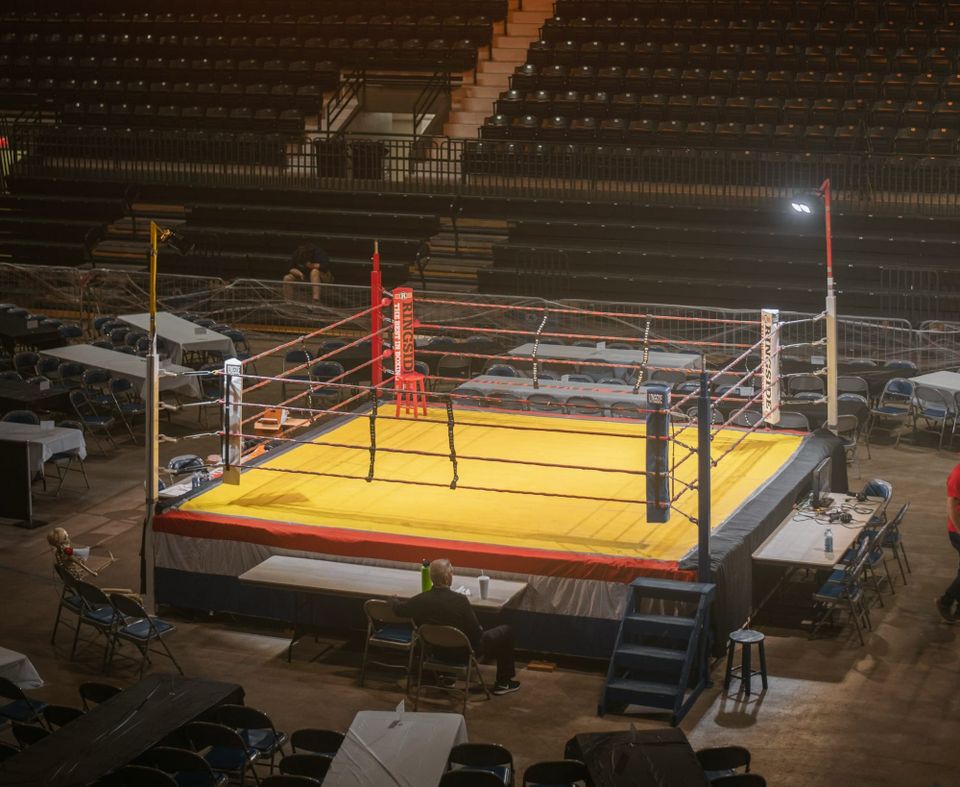
I imagine moments constantly unfolding before us. The growth-type forces of syntropy clashing with the inevitable forces of dissipation, entropy. Each moment is a tug-of-war. If these are “Tropy” twins, they are certainly twins who like to wrestle. Each competes for the upper hand in a never-ending match.
In this match, entropy wears the home jersey and is a brutish, slow, but nearly irresistible force. Syntropy is the dashing opponent who wrestles with a distinct style. Syntropy seeks to win through a creative approach, driving for a knockout move. This analogy of twins wrestling weakens the more I use it. Plus, my analogy is not that strong after all. These two forces don’t fight each other directly; they fight over nature and how the world unfolds. Reality is the contested prize. Two natural forces with distinctive characteristics drive how our world emerges.
This contest happens at a granular level beyond our eyesight, but it also happens at the level with which we interact. This is the key point. Life offers us an invitation to join this match daily, to wrestle along. By doing so, we may make our lives more meaningful.
Let me explain. I fully believe we can find deep meaning in how we relate to and use syntropy and entropy. Life is not about our simple existence, living longer, using our resources to gain extra time, resisting our own entropy until we inevitably lose and wither away. Doing this is smart, a worthy pursuit, but not the point of life.
Our job is to create and sustain, like the synergy wrestler, but also selectively to destroy and dismantle as the entropy wrestler does. We are both builders and breakers. In both cases, we must govern our actions by referring to the goals and boundaries of the Life Ethic (LE).
A meaningful life is one that recognizes that entropy is coming for us and uses this insight to drive us to use our skills and influence, call it power if you want, for good while we can. It is about being agents for positive change and doing so in exemplary ways. We need to strive to wield the powers of entropy and syntropy ethically. There goes my didactic self again! Honestly though, I think this is where we can find our meaning in life.
The Life Ethic must be our guide to what we synergistically support and also to what we entropically dismantle. The key questions are: one, what will we build and break, and two, how will we go about it? Think of these as the “what” and the “how”. What are we trying to accomplish, and how will we do it? Both the what and the how must be guided and limited by the precepts of the Life Ethic.
Consider some examples. By our day-to-day complacency, we may inadvertently support and maintain organizations and complex structures that do not support the existence and growth of life. We should bring the force of entropy to these structures and work actively to dismantle them. Tap that entropy wrestler into the ring.
Of course, the means we employ to do this must also support the existence and growth of life. Mainly, I am thinking of passive resistance, civil disobedience, and similar approaches here. The entropy wrestler must battle within the LE rules.
In addition, there may be opportunities at hand in which we could facilitate syntropic association, organization, and growth. What can we do to build, to organize disparate individuals into powerful cooperative entities that help create the ethical environment we need? What can we do to heal where damage has been inflicted? Like above, we must evaluate these opportunities through the same LE lens.
Each of us has a role to play in shaping the contest between entropy and synergy. Our life’s mission is in front of us if we can just recognize it. Seize the opportunity to harness these two forces in ways that support the existence and growth of life, governed by the terms of the Life Ethic.
But how do we do this? In Natural Wonders, I also offer six virtues to guide us in how to live in ways aligned with the Life Ethic. These virtues are Awareness, Truthfulness, Compassion, Generosity, Positivity, and Vitality. These six support our mission in selectively facilitating entropy and syntropy. I think we should try to use these six to guide the “Tropy” twins.
Beyond these six virtues, I would like to add one more. Creativity. In my last essay, I said that syntropy requires three things: intention, awareness, and effort. To me, these fall under the broad term of creativity.
Creativity is exemplified in both entropy and syntropy. Shaking the “Etch-a-Sketch” toy, while destructive to the existing sand image, was step one of the creative process. It wiped away the old art and created a blank screen for new drawings. Creativity seems to encompass both the entropic elements of taking apart and the syntropic aspects of building. Creativity is a unique tool to help us manage these two powerful forces.
Mr. Didactic, you are being preachy again.
I hoped I was inspiring and insightful, but I understand the material is heavy. However, I have one more concluding point before class is dismissed.
The Tropy twins are ready to work with us. We need to use our skills and attributes, these six virtues and our creativity to facilitate the positive interplay of entropy and syntropy to make the world a better place for life to exist and grow. This we must do with self-imposed limits on how we achieve these aims. The Life Ethic is the guide that provides both the goal we should seek and the boundaries on the means we should employ to bring about those aims.